
Mid July, the Ivy Substation in Culver City saw the return of Louise Reichlin’s company Los Angeles Choreographers and Dancers, as they presented a body of existing repertory flanked by two new pieces—Metro Transformation and HEART Part 1. Urban and Tribal Dances also made their appearance, stepping out of the 90’s and donning the coat of the current era. The matinee at the intimate theater housed a small but appreciative crowd, who were met with a highly focused performance from the dancers—a performance that only grew in ardor as the show progressed. The format was such that Louise Reichlin, illuminated in the darkness and seated stage right at a desk, in the role of narrator and interpreter of her work, provided context for each piece as the company prepared for the next dance.

The first new work, Metro Transformation, was characterized by a flurry of social stylings danced between a construction worker and an elegant passerby. The two were dressed according to their roles, one a man in a safety vest and hard hat, chiseling away the concrete with a jackhammer; the other a woman in a long flowing green dress, her red fan leading her whirling through the street and into his arms. Their dalliance consisted of energetic turns and lifts permeating recognizable social dance forms such as tango, salsa, and lindy. Amidst the exchange, a transformation occurs; their meeting concluded as quickly as it began; the male dancer exited as the female dancer assumed his work, perplexed as she hammered away. The playful piece reflected Reichlin’s artistic value of social stories and whimsy.

A monitor display of a beating heart sparked the inspiration for HEART Part 1. The medical image of a pulsing image of a heart greeted the audience at the beginning of the piece, projected large over the poised dancers. The 6 performers begin with disjointed machinations and wordless vocalizations, which eventually lead into arcing and circling pathways, pulling each dancer into orbit as they interacted. The dance distinguishes the individual dancers through personalized shapes and gestures while also wrapping them together with the use of mutual partnerships, lifts, and supports. This connection continued to unfold as the dancers evoked the ebbing and flow of the pulsing heart while bleeding into different groupings.
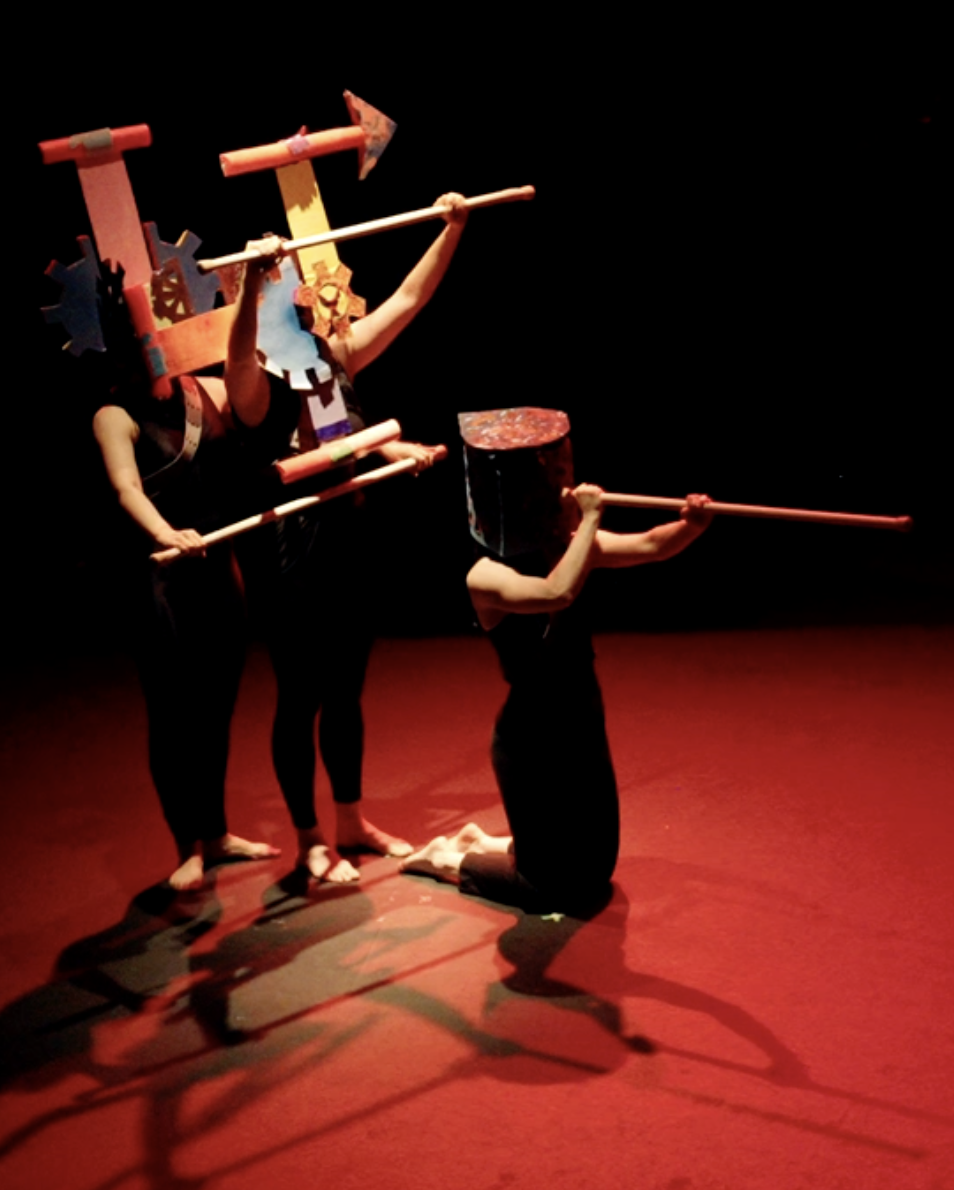
The bulk of the show featured a collection of Urban and Tribal Dances, originally choreographed between 1990 and 1992. Here, they emerged again with more recent additions, retooled in the shape of our contemporary world. The work centers around the resounding echoes of our innate human experiences: community, conflict, loneliness, continuance. The multimedia suite makes use of the screen, with some dances presented in film only and others performed live in the space. The balance between screen and live dance reflected how our lives now overwhelmingly integrate the physical and virtual.
This was most poignant in the section Alone. A herald of what was to come, the restaging and reworking of Alone began development in 2019, and the project was put on hold during the 2020 stay-at-home order. It became an artifact of the pandemic, incorporating Zoom footage of the dancers winding in and around their respective tents, in deserted parks, in living rooms. What was originally a solo piece, the reimagined work morphed through the isolation into a virtual group choreography. The individual videos formed a moving collage as the dancers artificially rejoined on the screen—physically separate yet artistically connected.
The classical feel of Urban and Tribal Dances serves as a link from past to present; the archetypal characters of the originals fulfill their roles of both war in the 1990s and war in the 2020s. It effectively stepped out of the 90’s to don the coat of our current era. The persisted theme of building and crumbling physical and conceptual walls between humans is as critical as ever. We see this in the simultaneous separation and togetherness of the phone and the screen. Louise Reichlin continues to pursue stories and themes that are timeless and is not afraid to revisit her own creative history in order to evolve it as the world continues to change around her. This approach is something Modern Dance choreographers like Reichlin do very well. Rather than follow the immediate trend, they look for underlying currents that run deep into the human experience.
Reflecting on our most primitive history, to today and into the future, Louise Reichlin has been using dance to make sense of the world around us with its many peculiarities, challenges, and media forms. Few choreographers can celebrate such a long and productive creative career, and while contemporary aesthetics will be continually driven by the latest and greatest, there is great integrity in pursuing the life of a dance artist, which can be appreciated in her vision and continued effort over the decades.


 LA Dance Review
Leave a comment