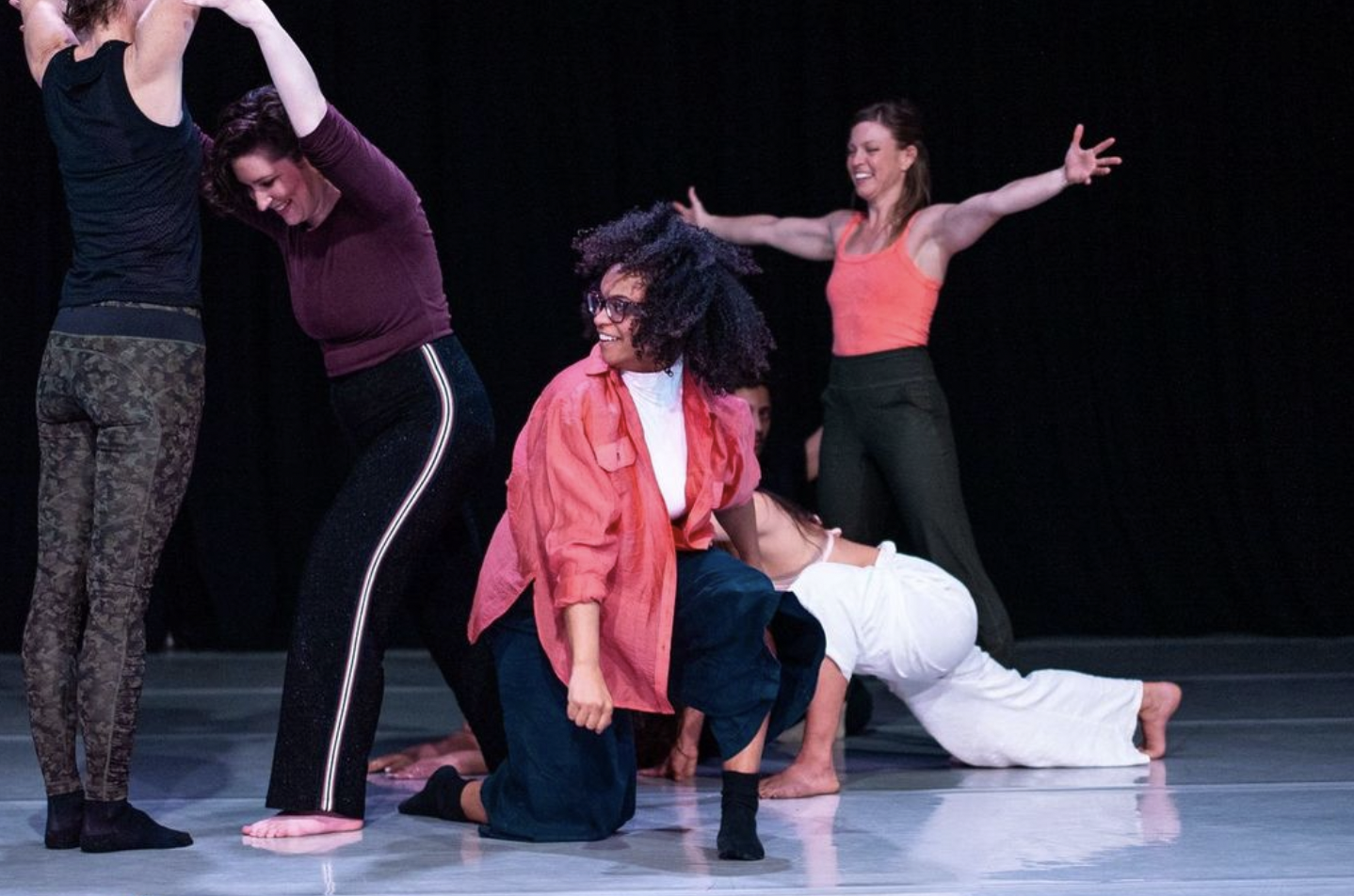
The immersive event, entitled Our Dancer’s Project, produced by the socially progressive company, Bodies in Play, on April 13th at LA Dance Project, is one that a written description can never do proper justice to. Envisioned and directed by company founder and facilitator Andrew Pearson, the ensemble cast (Cristina Florez, Darby Epperson, Celine Kiner, Tiffany Sweat, Daurin Tavares, Rachel Whiting, and Sadie Yarrington) wrote, co-choreographed, and crafted an experience that went far beyond a traditional dance performance.
The event began with a choose-your-own-adventure format (I was experiencing FOMO already). Act I: Play With Us, had the audience members self-select from three options: Room 1 promised to get the blood moving with some dancing and grooving; Room 2 offered connection and affirmation through a guided process of Q & A with a partner; and Room 3 invited perspective and insight by offering peeks into the dancers’ journals before collecting audience contributions to reflective questions.
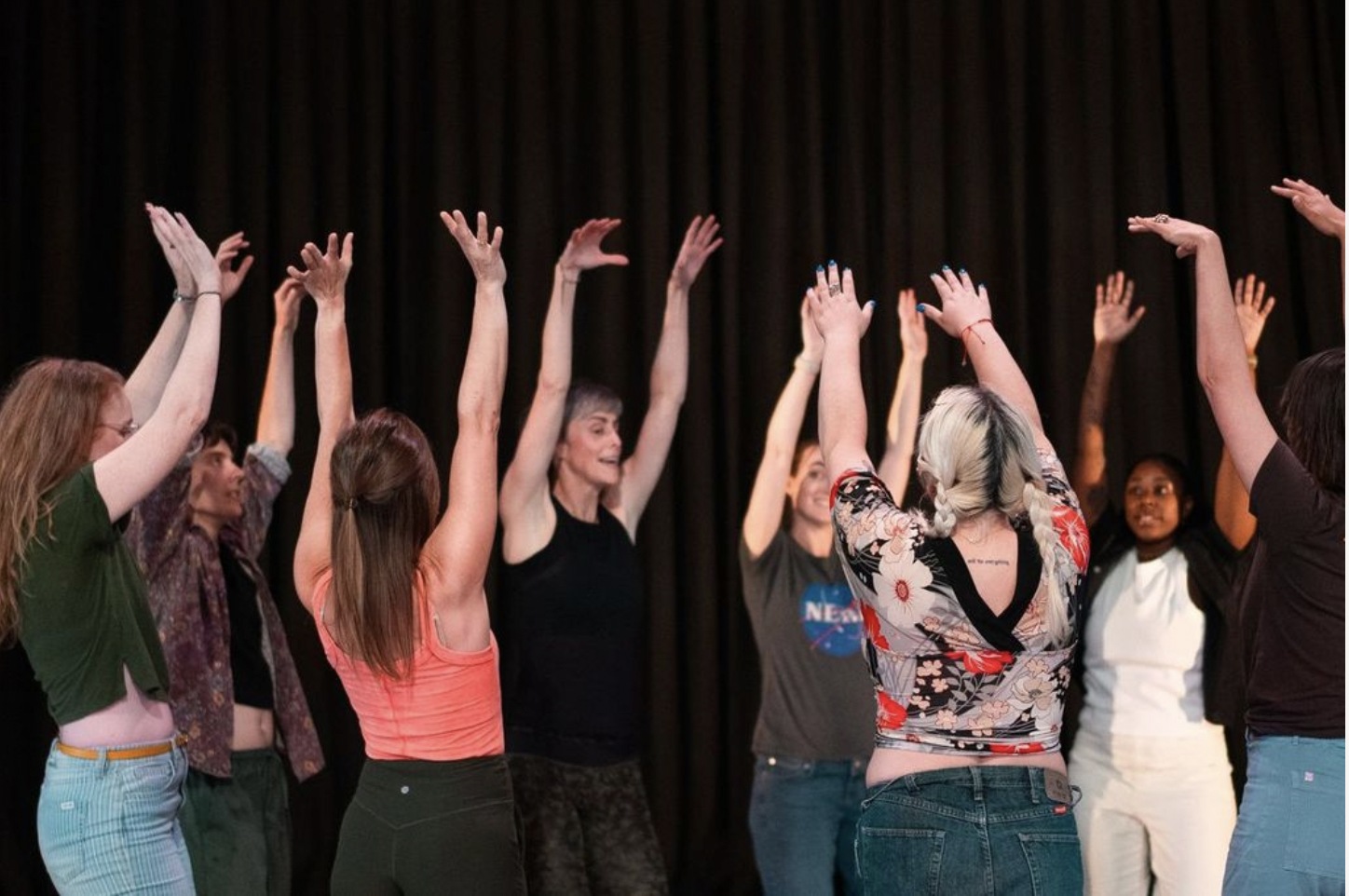
Act I lasted for approximately 45 minutes and was met with excitement and engagement by the sold-out audience. I participated in Room 2 that promised to “Get a Little Woo Woo.” And, by the end of the experience, I had met a new best friend, Molly, awarded her with the well-deserved “Brave Voice” award (the first of its kind), and received my own award as the “Corporeal Ponderer.” I have never felt so seen by a near stranger. The objective of the activity fostered connection, investment, and perhaps a little vulnerability in a risk-free environment. It also brought up the evening’s central theme of identity and the complex influences that form a person’s identity – some of which we control, and others we may not.
It seemed clear from the audience chatter afterward that each of the rooms gave the audience a behind-the-scenes look into the collaborative mechanics of this mold-breaking collective. Each room acted as a doorway into the group’s reflective and creative process, giving the audience members a framework for viewing the “Main Event” that was to come. By the time the audience sat down in the black box bleacher-style seating, we all understood that we were not going to witness the traditional concert dance performance. We were primed for anything and everything. The participatory nature of Act I was much needed and one might argue essential for the second half of the event to be the triumphant success it was.
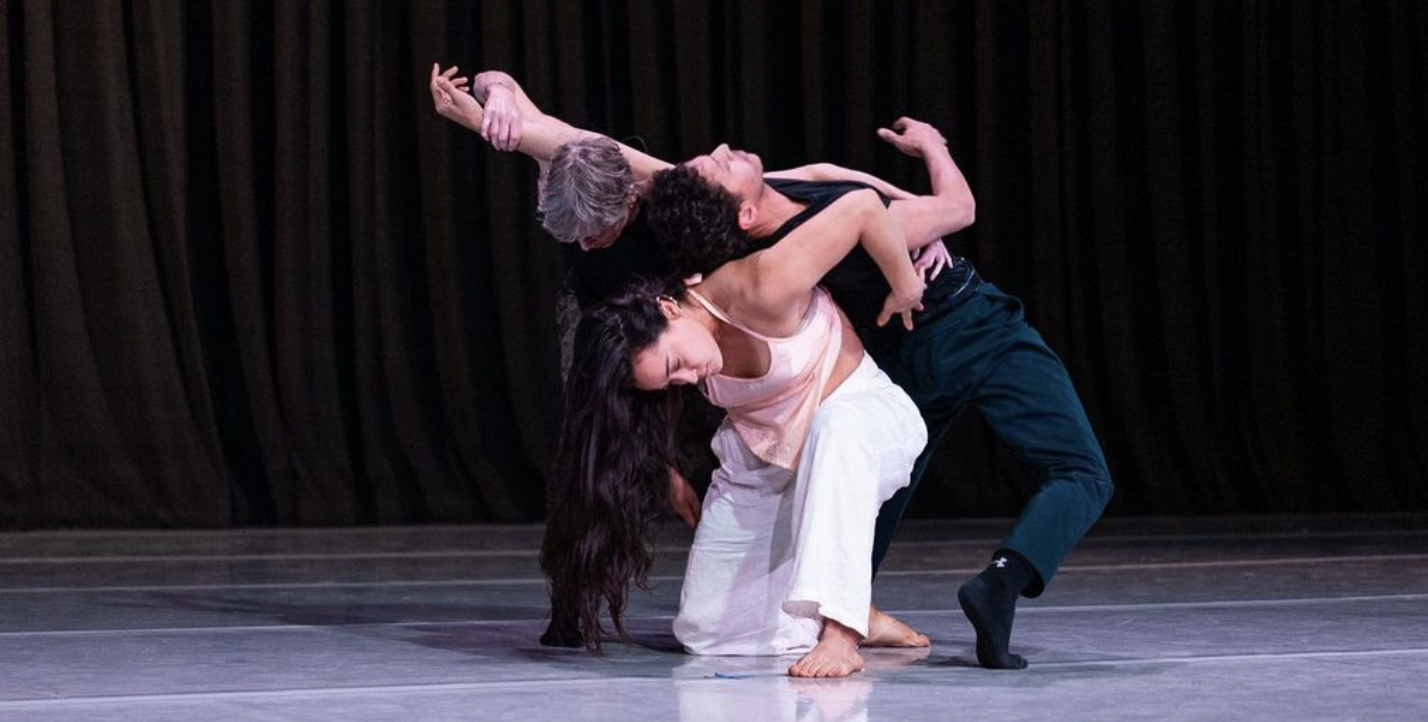
Act II: Watch Us Play consisted of a 70-minute work that blended spoken word, improvisation, and choreography into a tapestry of historical facts, personal experiences, and embodied identities. It began with Pearson’s disembodied voice on the microphone (sometimes called the “God mic” in theaters because it is used by directors and stage managers to direct the performers and crew members during the rehearsal process while sitting in a dark theater or booth). Pearson began by sharing the story of a project initiated by dancers nearly 50 years ago during a time of economic hardship for dance professionals in New York. We learned the story of this “Dancer’s Project” was the origin of the famous and overwhelmingly successful Broadway musical A Chorus Line (for which director and choreographer Michael Bennett received many accolades). During this informative and extensive introduction, pairs of dancers took the stage, setting up music stands and microphones for themselves before assuming still shapes – standing, seated, leaning back on an arm, looking into space. The still shapes allowed us to see the dancers, differentiate them, and possibly identify with them as we continued to listen to the story.
The piece progressed from the history of the Dancer’s Project to the project of this dancing cohort. Over the course of the show, each dancer read from their journals – research artifacts from their creative process – and shared personal stories about their relationship with dance and their identities as dancers. Each had a turn to articulate how they started dancing, if and when they “broke up” with dance, and instances where they faced the inherent challenges and inequities inside the professional dance industry. Stories of disapproval by family members, humiliation by casting agents, abuse by choreographers, and denial by gatekeepers were interspersed with dance material that seemed mostly improvised – and if not improvised, an experiment in accidental design. The dancers were playing for us. We got to watch.
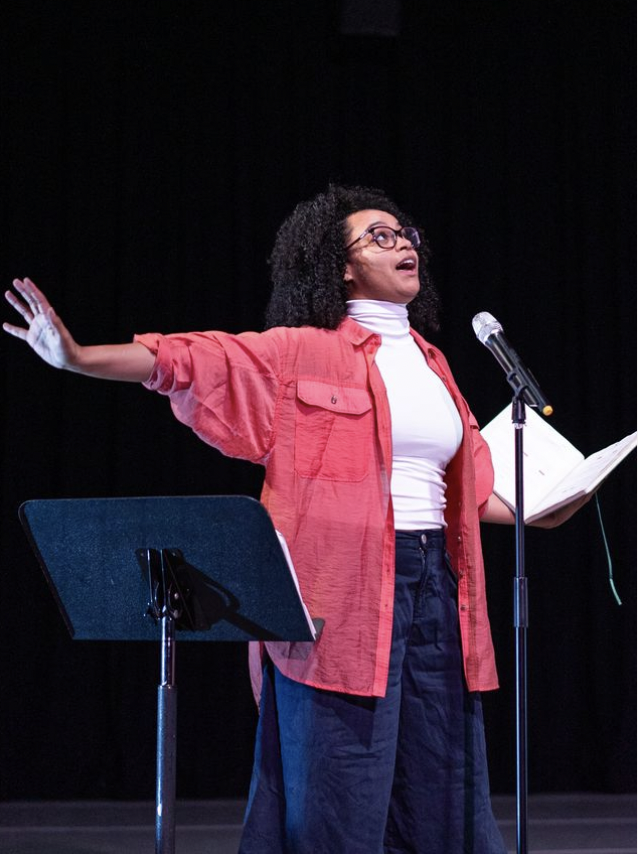
As the piece continued and we learned more about each of the dancers (in a mirrored format to Chorus Line’s narrative structure), we started to understand just how deeply troubling the dance industry is for the majority of dancers – including the “successful” ones who were able to secure employment. For members of the local dance community in the audience, the stories felt cathartic. There were many nods when the dancers spoke about the merciless competition, ubiquitous lack of funding for projects, and pitiful pay as dancers. There were snaps and audible responses when Sadie Yarrington shared her hurt and confusion over tokenism as a dancer of color.

For those in attendance who work outside of the dance or arts community, the stories were educational. Darby Epperson performed a heart-wrenching solo running in circles and then raising her hand in a “pick me” gesture, while the others told stories of hardship, competition, and expendability as dancers. But there were stories of success and empowerment as well; Cristina Florez retold an instance in which she successfully advocated for herself to receive equitable pay as a choreographer, and Tiffany Sweat spoke fondly of her rewarding career touring and performing in companies that valued her as an individual and contributing artist.

Woven between and amongst the stories continued various dance “happenings.” Some were more structured than others. A consent-based, collaboratively-directed and performed piece was created and performed for us in real time. Another playful and evocative moment was the spicy duet between Florez and Daurin Tavares. This Latin social dance influenced duet was sensuous and satisfying. It was one of the few pieces that was performed to the entirety of a song and thus had a rewarding sense of arc and arrival in the performance. Not to mention both Florez and Tavares are beautiful performers to watch and absolutely delicious together.
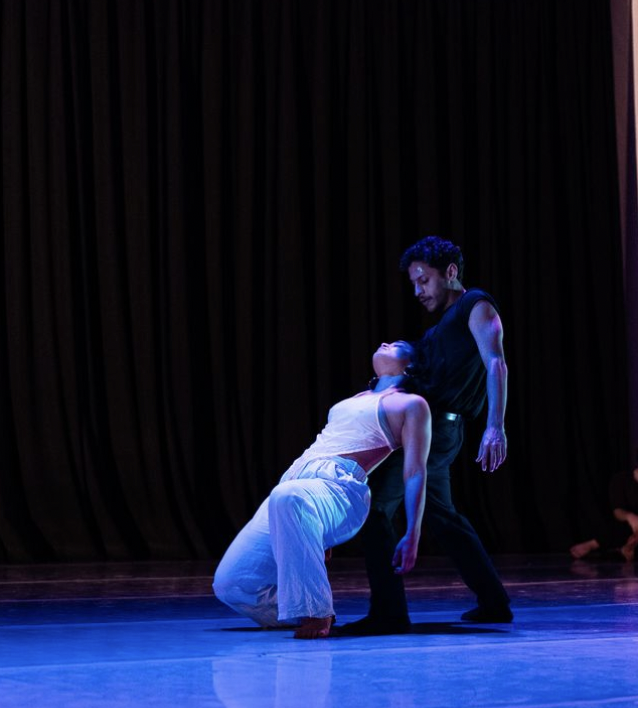
There was also the unexpected revelation that the performer and dance critic Celine Kiner had been reviewing us as the audience all evening, writing about our “performance” as an audience. I’m pleased to say we got an excellent review, and selfishly I can say my very own award (remember the Corporeal Ponderer award Molly gave me?) was mentioned in the review (I felt twice as seen in that moment!).

There is so much that can be said about the details of the show, including Rachel Whiting’s story of her 10-year breakup with dance, which seems impossible when you witness her stunning balletic form in action and Pearson’s own admission that nine out of nine of his self-produced shows have cost him money and left his budgets in the red. But all of this was in service of a bigger vision.
Bodies in Play is a company with a mission to do things differently, and they did in this performance. They seemed to break as many expectations as they possibly could in one performance. They broke the psychological barrier between audience and performer; they modeled best practices for co-creating in a consent-based space; they educated with excellent research on a familiar (but incomplete) story; they challenged the nature of dance composition; and they held space for magic. How they managed to do all of this in a single evening is rather remarkable. They didn’t just crack the veneer of the dance industry; they set the dynamite of play at its innermost core and watched expectations explode.

The result was thoroughly enjoyable for the sheer ingenuity of the event. As a dance performance, it was raw. It was rough around the edges and at times suffered from the lack of compositional design. All of the performers were magnificent, and their dancing was rich and expressive, but compositionally it was anticlimactic. Many of the radio hits and dance favorite songs in the show were exciting to hear when they started, but then ended abruptly as the choreographic fragment of a solo, duet, or trio came to an unanticipated close. The result of the unfinished songs and choreographic phrases was a movement design that seemed haphazard and non-sequitur. It was, after all, a study in play. But because so many movement ideas were thrown into the mix, the dance performance ended up feeling like the most diffuse aspect of the show, which was ironic because dance was the heart of the story. There was contemporary floorwork, balletic gestures, Latin social dance footwork, yoga, spontaneous group shapes, modern dance references, and probably many more references that I didn’t catch. Even the final phrase, which was performed in unison (with Pearson joining in the mix), was a mishmash of phrase work from earlier solos and duets and, while performed with verve, had little compositional drive. The storytelling ended up being the anchor of the evening, and with theatrical direction and script consultation by Lisa Bierman, the spoken word was remarkably compelling, successfully shaping the show as a whole while the dance colored and flavored the text.
Another design element I found myself questioning was the lighting for the event. The design by Kyle Azzopardi seemed limited, perhaps by practicality or logistics, and didn’t always support the intimacy of the performance. The black legs (long heavy curtains) I am familiar with seeing in the space had been removed from the sides of the stage, revealing white walls and two lighting trees set on the diagonal. The color palette was appropriately gentle, with a majority of light aqua and a warm rose coming from front and top light, and a few colorful highlights from the side lighting tree. But the result of the general area lights was a lot of light bouncing off the white walls and widening the space. The benefit of the bouncing light and lack of masking was that we were able to see the performers seated along the sides watching each other throughout the performance. But the expanse of light also came at the cost of being able to visually highlight the intimate moments. Of course, one might argue, the exposed sides matched the emotionally exposing content of the show and added to the sense of a relaxed, informal community of witnesses. However, in this case, I found myself distracted by the amount of light during the more intimate moments because there was no way to isolate the dancers in the space.
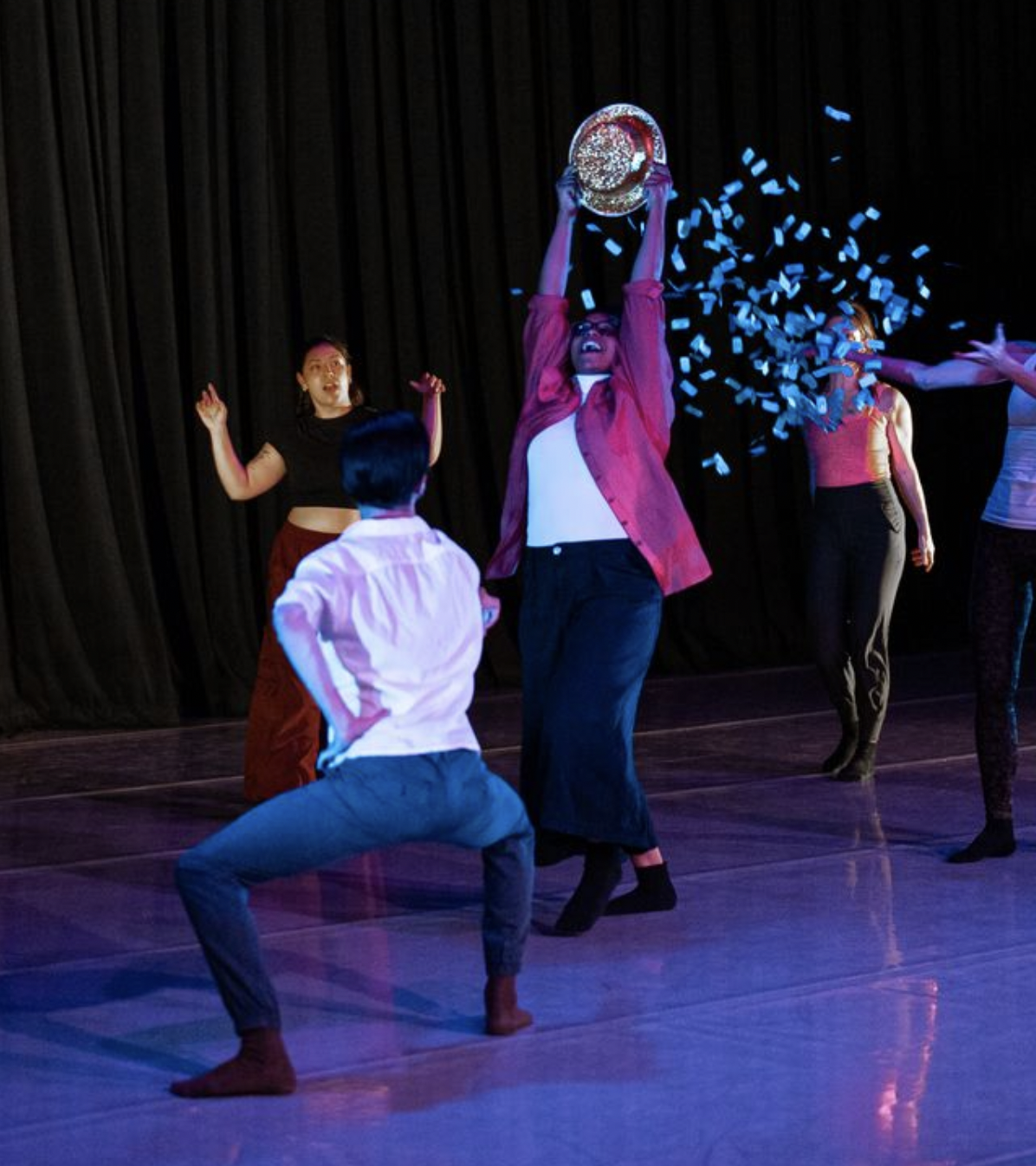
Despite these persnickety details, the show was a triumph. The full program available online included not only clear statements on the social justice values of the company but also the entire budget breakdown of the event. Now, that was a first for me. The courage of these artists to do something different, to question expectations, and to disrupt the status quo while being mindful of the process (so, it didn’t dissolve into polarization or anarchy) was a huge accomplishment. These artists are walking the walk, navigating the unmapped waters of change, and doing so with warm hearts full of hope. I hope to see the community continue to come out to support the artists of Bodies in Play (BiP) and the vision Pearson has gifted the community of dance by offering a new approach to dance theater that has transformative properties for the future of dance as a performing art.


 LA Dance Review
Leave a comment