Ricky Cole and Byron Bucao brought the heat and hype to Ventura County with their festival celebration of dance called Welcome to the 805. Hosted in Oxnard at the Oceanview Pavilion on November 12, the event showcased primarily hip-hop dance and crew-style performances. Between the matinee and evening performances, Cole and Bucao provided a fantastic dance opportunity for 47 local and regional groups to take the stage, making the event an action-packed day during which hundreds of dancers performed.

I attended the evening showcase, arriving to a packed house as people enjoyed dinner and drinks from local food trucks and vendors. This was my first event of this nature, and while I have a strong background in early vernacular Jazz dance, I am largely unfamiliar with contemporary hip-hop culture and the increasingly popular vehicles for competitive and commercial hip-hop, such as Hip Hop International and World of Dance tours. I attended to learn more about the industry and to honor the artists who largely work outside of the “traditional concert dance setting” but are relentless in pursuing their craft and artistry. With the stated goal of love and inspiration, the show was uplifting and supportive, with a casual, community feel that was above all welcoming.
Emcee’d by Cole, the showcase featured many large crews focusing on high-impact choreography with a blended movement vocabulary from various hip-hop styles. Crews such as The Voltz, Soul Fresh Fam, Emanon, Groove, and Electrolytes were exemplary in their execution of the art form. Working as a unit, the dancers seamlessly transitioned through formation changes while performing high-intensity choreography with commitment and passion. The craft of these large crews resides in their ability to generate stage pictures that morph and change rapidly to highlight solo or small group moments before charging into exquisite unison choreography with intense groove and movement detail.

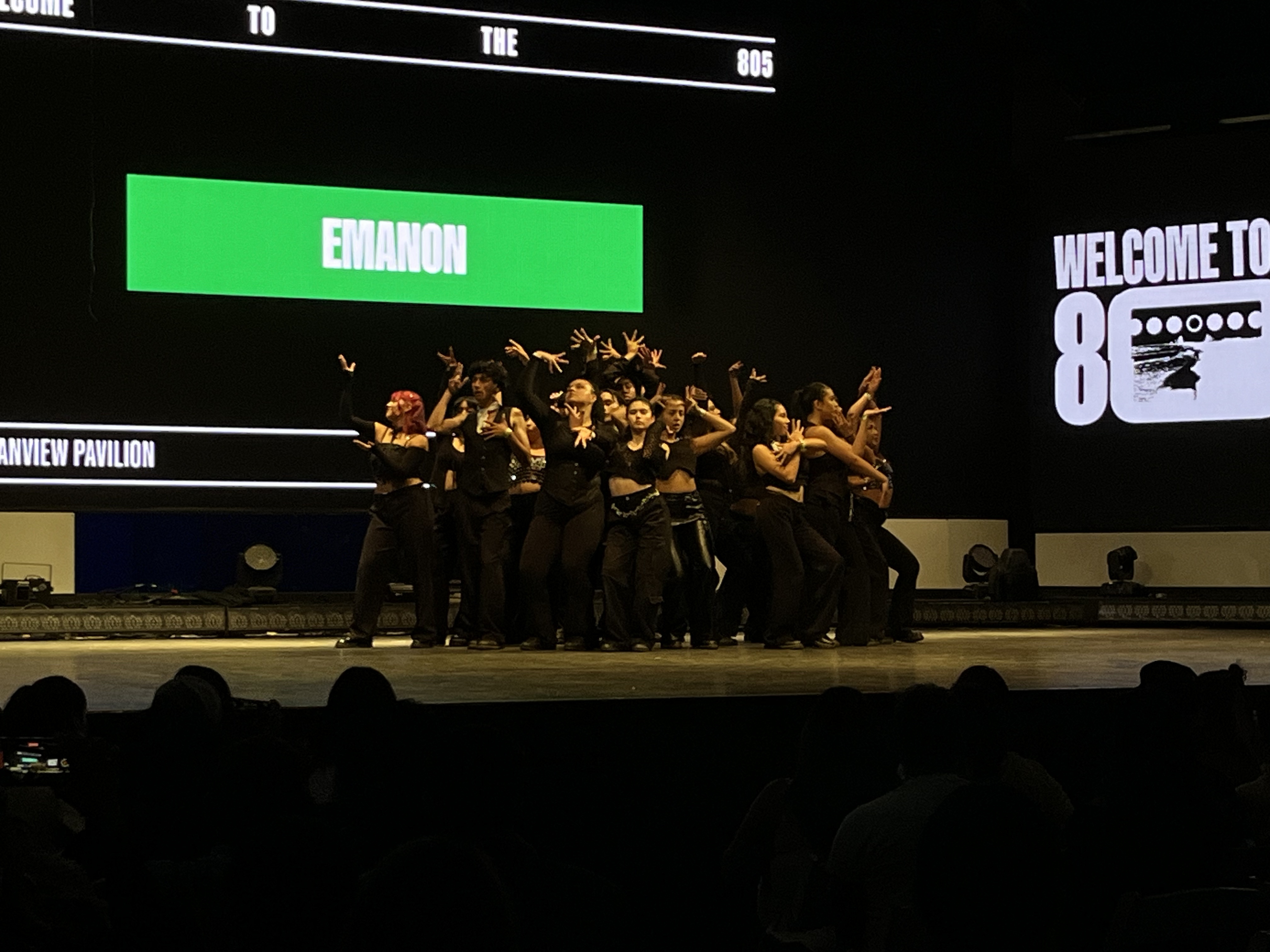

The crews often dressed in similar, if not matching outfits, highlighting the visual design in the movement with long white sleeves or white sneakers that caught the light and the eye during the highly complex patterns. Some crews like Vhurt and Groove took a more casual route to costuming, while groups like Elektrolytes and Avenue Jrs. utilized specific costuming to evoke a desired feel or tone for the piece. Because there is so much detail in the arm gestures of hip-hop styles like tutting, wacking, and locking, as well as the detailed footwork in shuffling, jookin’, and turfing, the costuming and lighting were essential to seeing the nuances of the more nuanced choreography. This is where additional production value could feasibly serve these artists. The lighting in this venue came from the front and back, which flattened the shapes of the dancers. There was no sense of lack; however, knowing the power of side lighting for dance made me a little sad that it wasn’t available in this venue.

One of the big differences between this event and other dance concerts I typically attend was the lack of background information provided on the artists. A QR code led me to the show order online, but there was no mention of who choreographed each piece, who organized costuming, or who edited the music (much of which was highly edited and mixed for the unique performances). While the lack of information provided disallows me from speaking to each of the artists separately, it does perhaps point to one of the central values of many crews, which is to work together as one body, one entity, one family.
The crew depends on the function of each of its members to be what it is, and no one member is more important than others. So while someone edited the music, and someone made the choreographic choices, for many of the crews, it wasn’t the highlight. It was only evident in the named performances by Alfonso Patino and Chris Wilkes that there was a single artist’s vision leading the ensemble. The rest of the crews were known simply by name, i.e., United Movement, Groove, and The Avenue, among others. One can see from the crew names that many are choosing to value community and unity to be at the forefront of their performance.

While hyped-up, everything-goes hip-hop was the dominant style of the evening and the movement tended to go at breakneck speeds, the pieces that stood out in the concert were those that tended to contrast the norm with more restrictive approaches to movement generation or composition that honored stylistic consistency and world-building over the “everything but the kitchen-sink” model. Alfonso Patino presented an all-male crew that was a standout of the evening, utilizing stillness and a smoother texture as a background for more expressive and dynamic moments. Patino’s movement generation focused on musically timed textural changes in the body to highlight a vulnerable side to the dancers that was less performative and more internal. Pristinely rehearsed, this work stood out for the dancer’s nuanced tone and musical drive.
Vhurt was one of the few groups to dance a whole song through. Set to Rihanna’s Wild Thoughts, this dance took a cool approach that contrasted the heat of the night. The use of a laid-back groove, rhythmic footwork, and feel-good flow rode the full arc of the song and didn’t waver for a moment.

Elektrobots was a crowd-pleasing trio dressed in barbershop vests and straw hats, dancing to a set of oldies hits. Their use of traditional popping, isolation, and mime was both charming and compelling. They worked together to impress and entertain with excellent body control and a vaudeville-like stage presence.
Beast Camp represented the voice of Krump in the festival. Coming from Compton, the crew separated itself from the rest of the night not only with their performance intensity but with their collective approach to dancing with each other on stage. After some initial unison choreography, the crew got down to what they do best, namely, soloing for each other and the audience. There was palpable excitement as they danced, celebrating each other’s power and ingenuity as human “beasts.” They each took turns gathering around the soloist who was enraptured with the moment, pressing in as close as they could without getting hit. Together, perhaps even unconsciously, they reflected the soloist’s movement ideas in their own bodies– as the soloist reached out, they too reached out–not in a choreographed way, but in a fully embodied somatic experience of the moment.

Strut Don’t Stress and Lux Contemporary rounded out the evening with a heels and contemporary blend respectively. Sadly, I had to depart the show a little early because, frankly, my parking pass ran out after 3 hours. I didn’t realize the event would go longer than that, but when a 10-minute intermission turned into 25, it was evident that this crowd was in it for the long haul. These dancers and their families were happy to be together and were not in a rush to leave.
Some of these dancers come from competitive high school dance programs, others study in a studio setting, and others still have transitioned into performing professionally or entered the world of hip-hop entrepreneurialism. What stood out most to me in the event was the way dance functioned to bring dancers together in a participatory and supportive way. Looking historically, one could argue that this type of event is the folk dance of today. The dance of the people, the kin who dance to tell their stories, find solace, and heal from the many hurts of life.

Photo by Brandon Tagami @photogami.jpg
The evening full show lineup included the following artists: A.I., Goon Force, Avenue Jrs, Alfonso Patino, United Movement, Vhurt, Lux Contemporary, Supremacy Jrs, The Voltz, Soul Fresh Fam, Emanon, Chris Wilks, Strut Don’t Stress, The Avenue, Groove, Supreme Kings, Beast Camp, Elektrolytes, Gravity, Electrobots, Black Flag, and V Mo. You can learn more about the festival and the matinee performances on the Welcome to the 805 website or Instagram account.
Additional photos by Author.


 LA Dance Review
Leave a comment